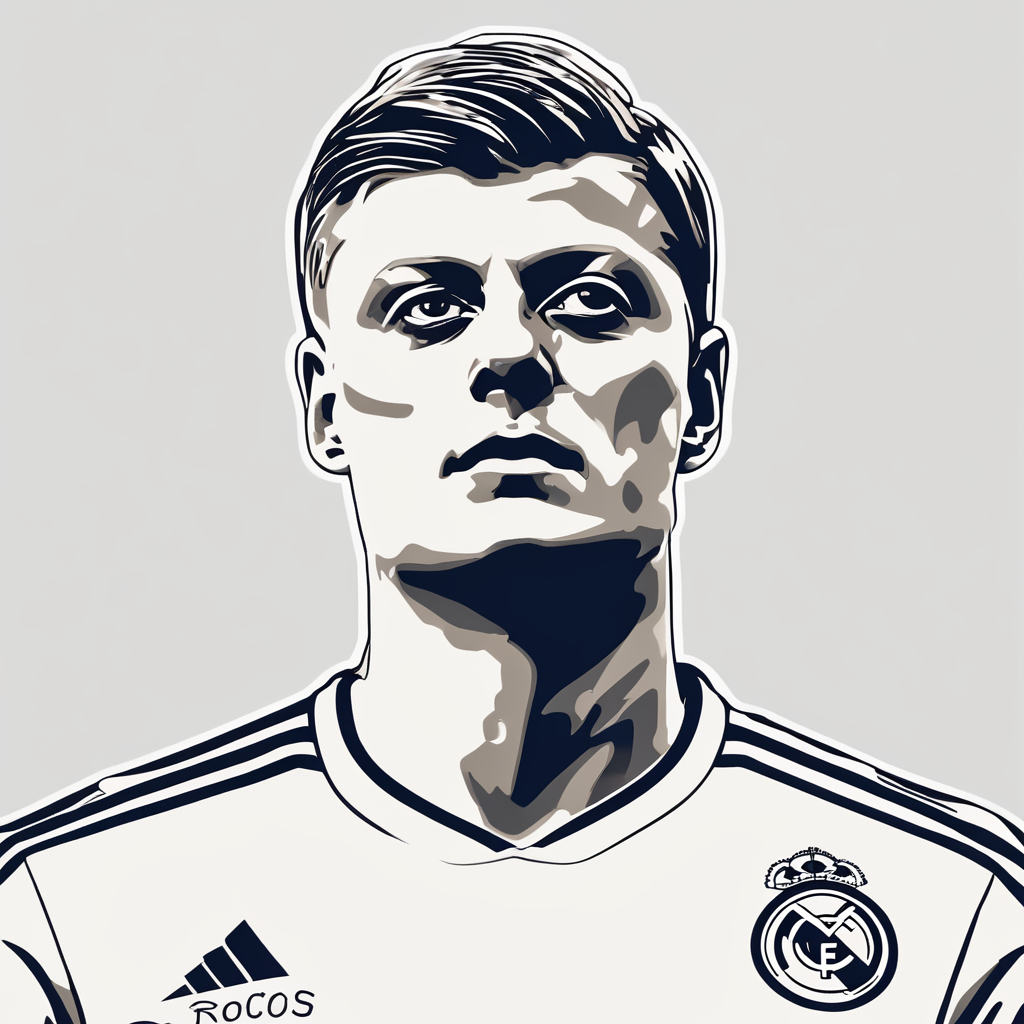

“The Ballon d’Or – not the trophy I was striving for. But that has nothing to do with the fact that I have never won it. The profiles of world-class players who have received this award have always been similar. But mine was different. In my team, there were world-class players: Cristiano Ronaldo, Luka Modrić, Karim Benzema. So I helped them achieve it. If we had become European champions, I would have had a chance at the Ballon d’Or,” says Kroos. The Ballon d’Or is one of the most prestigious individual awards in world football, recognizing the best player over the course of a calendar year. It has been awarded annually since 1956, with the exception of 2020 when it was not given out due to the COVID-19 pandemic.
Traditionally, the award has gone to players who have not only excelled on the pitch, but have also been the driving forces behind their team’s success. Superstars like Lionel Messi, Cristiano Ronaldo, and Zinedine Zidane have all won the Ballon d’Or multiple times, cementing their legacies as all-time greats of the game. However, Toni Kroos, the decorated German midfielder, has never won the prestigious award, despite being a key part of some of the most successful teams in recent memory. Kroos has won 4 UEFA Champions League titles, 3 FIFA Club World Cups, and 3 Bundesliga titles over the course of his illustrious career. He has been a central figure in Real Madrid’s recent dominance of European football, helping the club to 4 Champions League trophies in the last 9 years.

Kroos acknowledges that the Ballon d’Or has not been a personal priority, saying “it’s not the trophy I was striving for.” He recognizes that the award typically goes to players who are not only exceptional on an individual level, but are also the driving forces behind their team’s success. “The profiles of world-class players who have received this award have always been similar. But mine was different,” Kroos says. While he has played alongside some of the greatest players of his generation, including Cristiano Ronaldo, Luka Modrić, and Karim Benzema, Kroos has always seen his role as more of a facilitator – helping to create chances and maintain possession for his more attack-minded teammates.
Kroos believes that if Real Madrid had won the European Championship, he may have had a better chance of winning the Ballon d’Or. “If we had become European champions, I would have had a chance at the Ballon d’Or,” he states. The Ballon d’Or often goes to players who have won major international tournaments, in addition to their club success. Despite never winning the Ballon d’Or, Kroos has cemented his legacy as one of the most successful and influential midfielders of his generation. His ability to control the tempo of a match, make incisive passes, and dictate the flow of play has been pivotal to Real Madrid’s dominance in recent years. While the Ballon d’Or may have eluded him, Kroos’ place among the greats of the game is secure.
Toni Kroos’ illustrious professional career came to a close at the 2024 European Championship. After over a decade of dominating midfields at the club level with Real Madrid, Kroos hoped to finally capture a major international trophy with the German national team before hanging up his boots. However, Kroos and Germany’s quest for European glory was cut short in the quarterfinal stage. In a closely contested match, Spain emerged victorious with a 2-1 scoreline, ending Germany’s tournament aspirations. It proved to be Kroos’ final appearance in a Germany shirt, as the 34-year-old announced his retirement from international football shortly after.
Throughout his 15-year senior career, Kroos had established himself as one of the most accomplished midfielders of his generation. His ability to control the tempo of a match, dictate possession, and make incisive passes made him a vital cog in the machinery of some of Europe’s top clubs. After making his professional debut for Bayern Munich in 2010, Kroos quickly rose through the ranks, becoming a key figure in the German giants’ midfield. He helped the club win three Bundesliga titles and the UEFA Champions League in 2013, cementing his status as one of the best young talents in world football. Kroos’ performances at the club level soon caught the eye of Real Madrid, who moved swiftly to acquire his services in 2014. It proved to be a match made in heaven, as Kroos’ metronomic presence in midfield complemented the attacking flair of the likes of Cristiano Ronaldo, Karim Benzema, and Gareth Bale.

Over the next eight seasons, Kroos would go on to win an astonishing four UEFA Champions League titles, three La Liga crowns, and three FIFA Club World Cups with Real Madrid. His ability to control the tempo of games, dictate possession, and make incisive passes was crucial to the Spanish club’s sustained success during this period. Despite his incredible accomplishments at the club level, Kroos’ international career with Germany was somewhat bittersweet. The midfielder was a key figure in Die Mannschaft’s 2014 FIFA World Cup triumph, but he was unable to replicate that success in subsequent major tournaments. Kroos’ final match with the German national team, the quarterfinal defeat to Spain at Euro 2024, was a poignant end to his illustrious international career. Though he had hoped to cap off his time with the national team by winning the European Championship, the loss to Spain left Kroos and his teammates devastated.
In the aftermath of the defeat, Kroos made the decision to retire from international football, choosing to focus on his club commitments with Real Madrid for the final years of his career. It was a difficult decision, but one that Kroos felt was necessary to prolong his time at the top level of the game. As Kroos stepped away from the international stage, he left behind a legacy as one of the most accomplished and influential midfielders of his era. His ability to control the tempo of matches, dictate possession, and make game-changing passes had been instrumental to the success of both Germany and Real Madrid over the course of his illustrious career.

